What Is the Most Dangerous Type of BASE Jumping?
BASE jumping has long been considered one of the most dangerous forms of parachuting. Since the early 1980s, the BASE Fatality List (BFL) has documented incidents from around the world involving jumps from fixed objects.
Today that list includes 537 recorded fatalities - As of March 7th 2026.
A question that often arises when examining this data is simple but important:
What type of BASE jumping is the most dangerous?
To understand the answer, it helps to first separate BASE jumping into its two primary equipment configurations: slider-up and slider-down jumping.
Slider-Up vs Slider-Down BASE Jumping
In BASE jumping, the slider can either be set inside the pack job or be removed or collapsed depending on the environment and the height of the object.
Slider-up jumps keep the slider inside the pack-job to slow the parachute opening. This configuration is typically used on higher objects where jumpers take a longer delay (typically 4+ seconds) before deploying their canopy.
Slider-down jumps remove or tie down the slider so the canopy inflates quickly. This configuration is usually used for lower objects such as Bridges, Antennas, Buildings, and low Cliffs where there is little or no freefall.
When the BASE Fatality List is divided along this line, the distribution becomes clear:
Fatalities Slider-Up — 399
Everything Else (Slider-Down / Non-Slider-Up)— 138
Total Recorded Fatalities: 537
This means that approximately 74% of recorded BASE fatalities occurred during slider-up jumps, while about 26% occurred during slider-down or other configurations.
At first glance this may seem surprising. Slider-down environments involve lower objects and less time to respond to issues, which many people assume would make them inherently more dangerous. However, the explanation becomes clearer when examining how BASE jumping has evolved over time.
The Introduction of Wingsuit BASE Jumping
One of the most significant developments in the history of BASE jumping is the introduction of Wingsuit Flying.
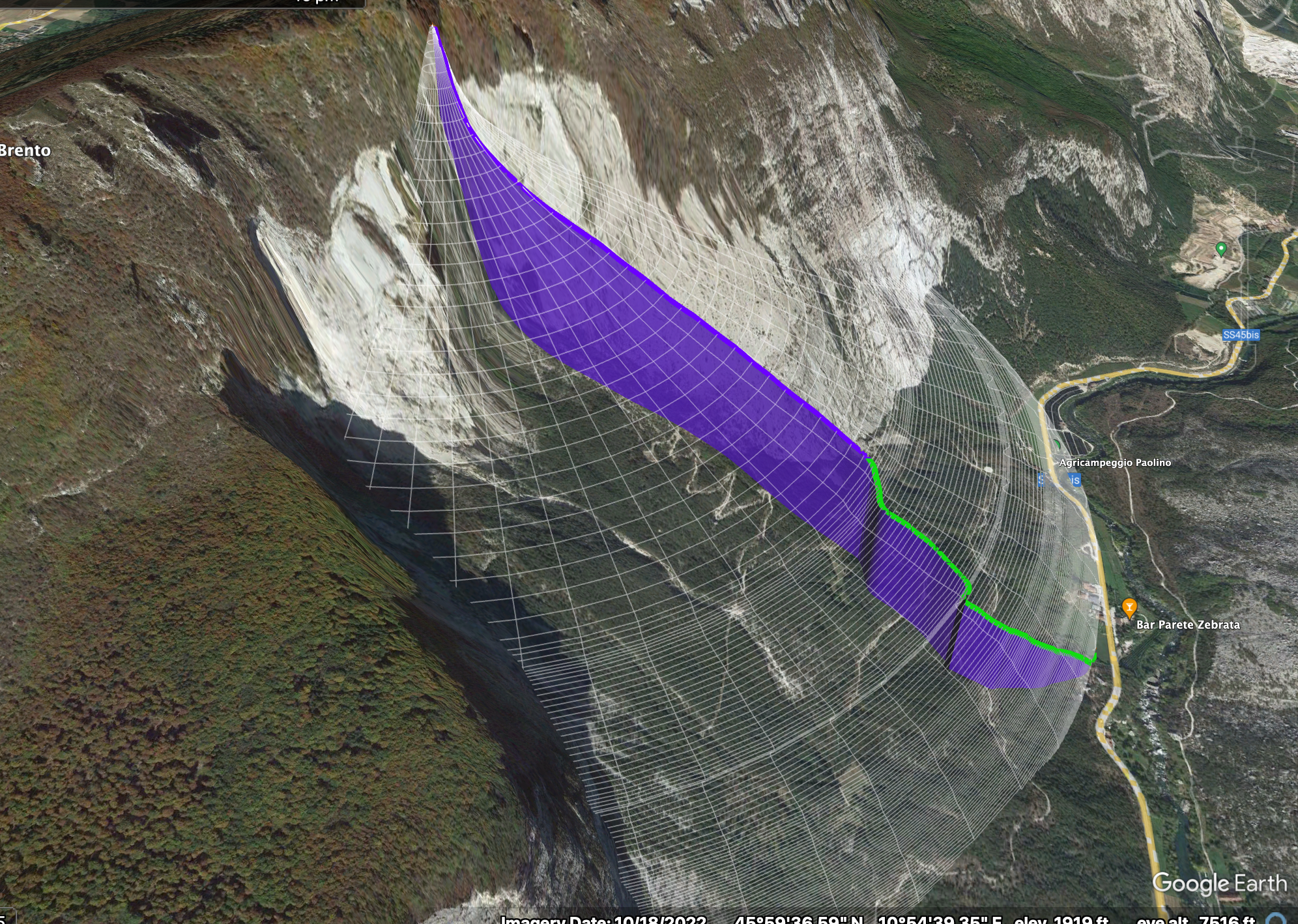
Wingsuits allow jumpers to generate forward glide by extending fabric surfaces between the arms and legs. When used in BASE jumping, wingsuits make it possible to fly along cliffs and mountain terrain before deploying the parachute.
This fundamentally changed the nature of BASE jumps. Traditional BASE jumping transitions quickly from exit to canopy flight, often within just a few seconds. Wingsuit BASE jumping, by contrast, involves extended flight at high speeds in close proximity to terrain.
As wingsuit flying became more popular, it began to represent a larger share of the incidents recorded on the BASE Fatality List. Many modern fatalities occur during high-speed terrain flight prior to parachute deployment.
Because wingsuit jumps require slider-up configurations and higher objects, they fall squarely within the slider-up category.
Fatalities by Decade
Another way to understand how BASE jumping has changed is to look at fatalities over time.
1980–1989: 24
1990–1999: 61
2000–2009: 139
2010–2019: 211
2020–Present: 102
The number of recorded fatalities increased significantly beginning in the early 2000s and peaked during the 2010s.
However, these numbers should not automatically be interpreted as the activity becoming more dangerous. Several broader changes have occurred during the same period.
Growth of the Activity
In the early decades of BASE jumping there were relatively few participants worldwide. As equipment improved and knowledge about the activity spread, the number of active jumpers increased dramatically.
More participants naturally lead to more total jumps being made each year. As the number of jumps increases, the total number of recorded fatalities is also likely to increase.
This growth in participation is one of the key factors behind the rise in fatalities recorded during the 2000s and 2010s.
The Influence of Video and Social Media
Another factor that has contributed to the activities growth is the rise of online video and social media.
Over the past two decades, BASE jumping footage has become widely shared on platforms such as YouTube and social media networks. Wingsuit proximity flying in particular has produced dramatic and visually striking videos that have reached millions of viewers around the world.
This increased visibility has introduced BASE jumping to a much larger audience than ever before. As more people discover the activity through online media, interest and participation have continued to grow.
As participation increases, the number of incidents recorded by the BASE Fatality List also increases.
Understanding Risk in BASE Jumping
The BASE Fatality List provides a complete historical record of how the activity has evolved.
When viewed through the lens of equipment configuration, the data shows that the majority of recorded fatalities occur during slider-up jumps, which include higher objects, longer freefalls, and disciplines such as wingsuit flying.
At the same time, the growth of the sport and the influence of modern media have led to a much larger global community of BASE jumpers than existed in the early decades of the discipline.
Understanding these factors provides important context when discussing risk in BASE jumping and highlights how the sport has changed over time.