

BASE Jumping Course in Twin Falls, Idaho
Twin Falls, Idaho is one of the most well-known places in the world to begin BASE jumping.
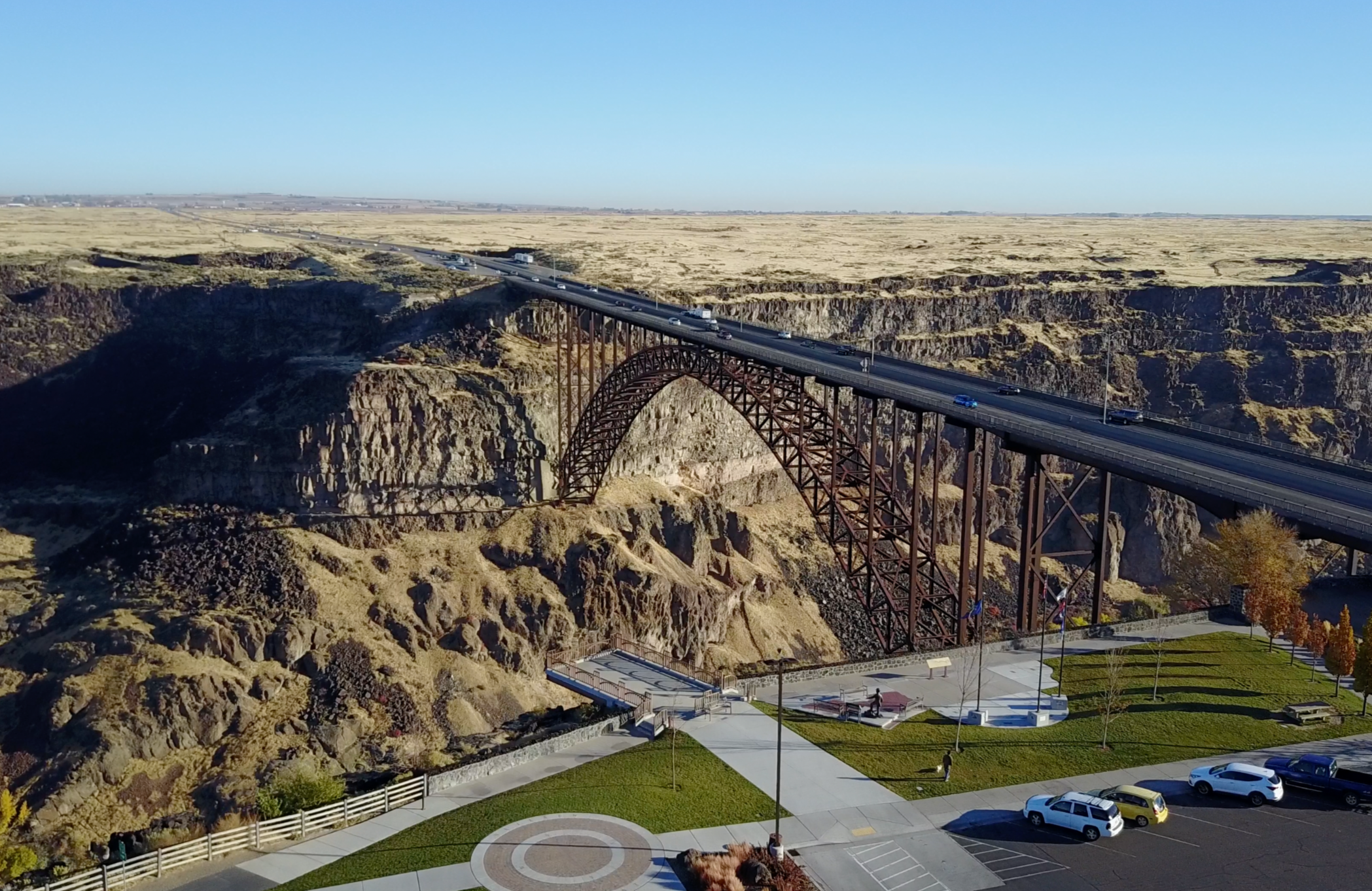
My Intro to BASE course in Twin Falls takes place at the iconic I.B. Perrine Bridge, a 486-foot bridge spanning the Snake River Canyon and one of the few structures in the United States where BASE jumping is permitted year-round.
This unique environment allows jumpers to focus on developing real skills — exit techniques, canopy control, decision-making, and risk management — in a location that has helped countless jumpers from all over the worlds take their first steps into BASE.
If you are an experienced skydiver looking to transition into BASE jumping, this course is designed to give you the foundation needed to do it safely and deliberately.
Why Learn BASE Jumping
in Twin Falls?
There are several reasons why Twin Falls has become one of the
most recognized training grounds for BASE not only in the United
States, but also in the world.
Legal Access
The Perrine Bridge is one of the only structures in the United States where BASE jumping is allowed year-round without a permit.
Ideal Height
At roughly 486 feet above the Snake River, the bridge provides enough altitude for canopy deployment while still requiring precise execution and discipline.
Large Landing Area
The open landing area along the Snake River Canyon gives students a forgiving environment to learn canopy control.
During the season which people typically teach courses (April-November) you also have the option of landing in the river if you encounter a malfunction. This is a huge safety advantage when compared to other objects.
Ease of Access
The bridge sits on the edge of town and is incredibly easy to access. You simply have to walk out to the middle.
It’s also very easy to get back out of the canyon following a jump. At many other locations, access can involve hiking or climbing to get to exits. Here, it’s as easy as it can be.
Proximity to Emergency Services
Regardless of how forgiving things can be, BASE jumping is considered one of the most dangerous activities people can do. Accidents happen, and when they do, timing can be crucial. The bridge is less than 10minutes from the hospital, so in the event that we need to go there, we can do so quickly.
Friendly Community
Twin Falls has developed into one of the most BASE-friendly cities in the United States, with jumpers visiting from around the world each year. The town itself has a real love for jumpers.
The bridge is the focal point of the town. You will see many business using the bridge as their logo, and sometimes they even feature a parachute.
Especially on weekends the bridge can be very busy with local families gathered around lookout points surrounding the bridge watching people jump.
Together these factors make Twin Falls one of the best places to begin structured BASE training.
What This BASE Jumping Course Covers
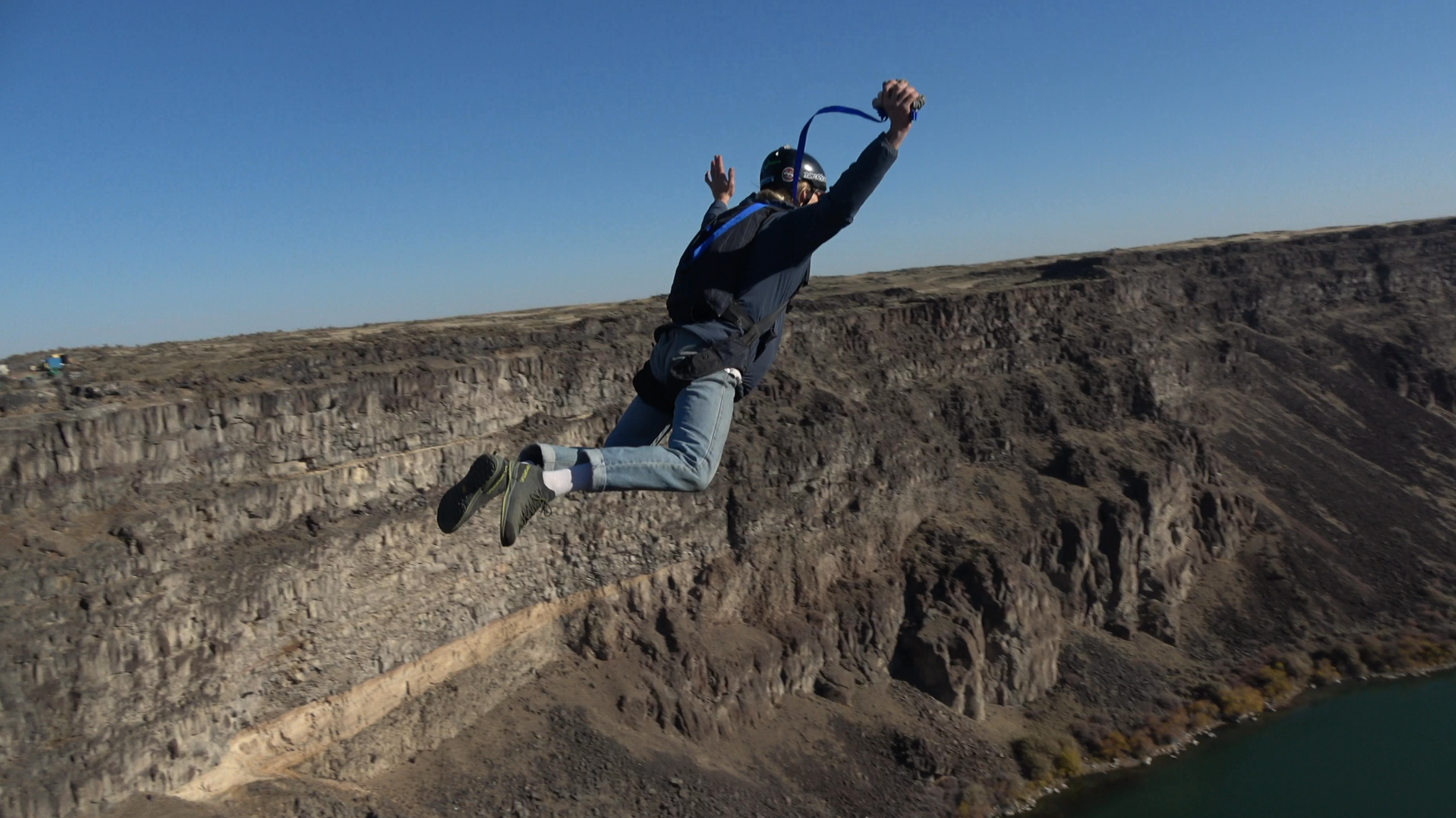
BASE jumping is fundamentally different from skydiving.
There is no reserve parachute, the altitude is dramatically lower, and decisions must be made immediately.
Because of this, the course focuses heavily on preparation, discipline, and system setup.
Training typically includes:
Object assessment - The foundation of everything
Malfunction protocols
A variety of deployment methods
BASE specific canopy flying techniques
Risk management and progression
Weather evaluation
The goal is not simply to complete a few jumps — it is to build the mental framework required to progress safely in the discipline.
Who This Course Is For?
This course is designed for experienced skydivers who want to transition into BASE jumping with proper instruction.
Students are recommended to have:
Strong canopy control skills
Solid packing technique
Extensive skydiving experience
BASE jumping is considered one of the most dangerous parachuting disciplines, with far less margin for error than skydiving.
Because of this, preparation and mentorship are essential.
Course Structure
Courses are typically conducted over 4-5 days and combine classroom instruction with practical jump training.
Day 1 of the course begins with a full evaluation of the Bridge.
Before you ever decide to jump off any object it’s a good idea to know everything you can about it. We look at maps, videos, and weather forecasts first, then we go down to the bridge and walk the landing area.
We identify potential hazards, alternate places to land, and one of the most important things - we look at physical weather indicators.
I refer to this as on-site and off-site evaluation. While specific to the bridge, this framework can be used when approaching every new object we plan on jumping, and my intention is for students to use that framework as they continue their progression.
We then review packing, exiting, and malfunction protocols. If the weather is good we will then do 1-2 jumps in the afternoon.
Day’s 2-4 solely depend on how students perform, and how they feel.
I like to tell students that I have 3 goals with the course:
1- You learn
2- You make progress
3- You have fun
There is no license to be obtained in BASE. Once you begin, a path of never-ending progression and adventure will be laid out in front of you. My course is simply the beginning of that.
Why Train With BASE Guiding?
BASE jumping instruction should be personal, deliberate, and focused on long-term progression — not just completing a checklist of jumps.
I focus on:
Individual coaching
Conservative progression
Equipment knowledge
Real-time decision making
Object and Weather evaluation

Frequently Asked Questions:
Where can you learn BASE jumping in the United States?
One of the most common places to begin training is Twin Falls, Idaho, where the Perrine Bridge allows BASE jumping year-round.
How high is the Perrine Bridge?
The bridge stands about 486 feet above the Snake River Canyon, making it one of the most well-known BASE jumping sites in the country.
Do you need skydiving experience before learning BASE?
Most students begin BASE training after developing strong parachute and canopy control skills through skydiving.
How long is a BASE jumping course?
Most courses take place over several days and combine classroom instruction with multiple training jumps.
How can I get to Twin Falls?
Twin Falls is located in southern Idaho along the Snake River Canyon.
Travel options include:
Boise Airport (BOI) – about 2 hours away
Salt Lake City Airport (SLC) – about 3.5 hours away
Twin Falls (TWF) - You will have to connect via SLC
The Perrine Bridge is located just north of downtown Twin Falls and is easily accessible from Interstate 84.
Many visiting jumpers stay in nearby hotels or short-term rentals during their training.
Twin Falls is a small town with a population of about 50,000. Everything is within a 10-15 minute drive.
The closest hotel to the bridge is The Quality Inn.