}
0
Skip to Content
BASE GUIDING
BASE GUIDING
COURSES
VIDEOS
CONTACT
ABOUT
Apply
Apply
BASE GUIDING
BASE GUIDING
COURSES
VIDEOS
CONTACT
ABOUT
COURSES
VIDEOS
CONTACT
ABOUT
Apply
What Really Matters When You Exit: Why Structured BASE Jumping Training Beats Rushing Your First Jump
John mcevoy 4/14/26 John mcevoy 4/14/26

What Really Matters When You Exit: Why Structured BASE Jumping Training Beats Rushing Your First Jump

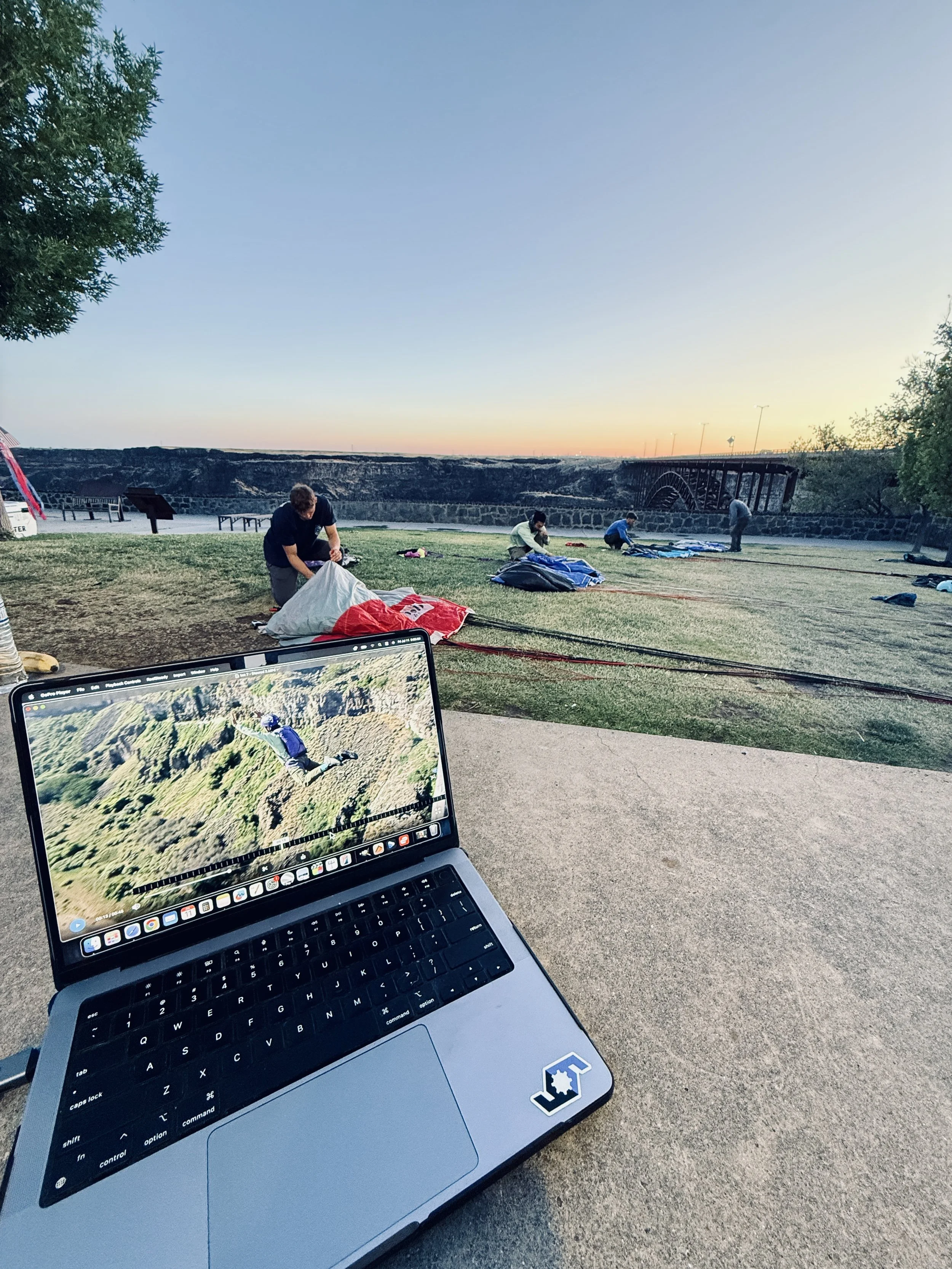
Student BASE jumping during Intro to BASE course by BASE Guiding in Twin Falls Idaho
Read More
How to Choose the Right  BASE First Jump Course in 2026 (Twin Falls Guide)
John mcevoy 5/28/19 John mcevoy 5/28/19

How to Choose the Right BASE First Jump Course in 2026 (Twin Falls Guide)

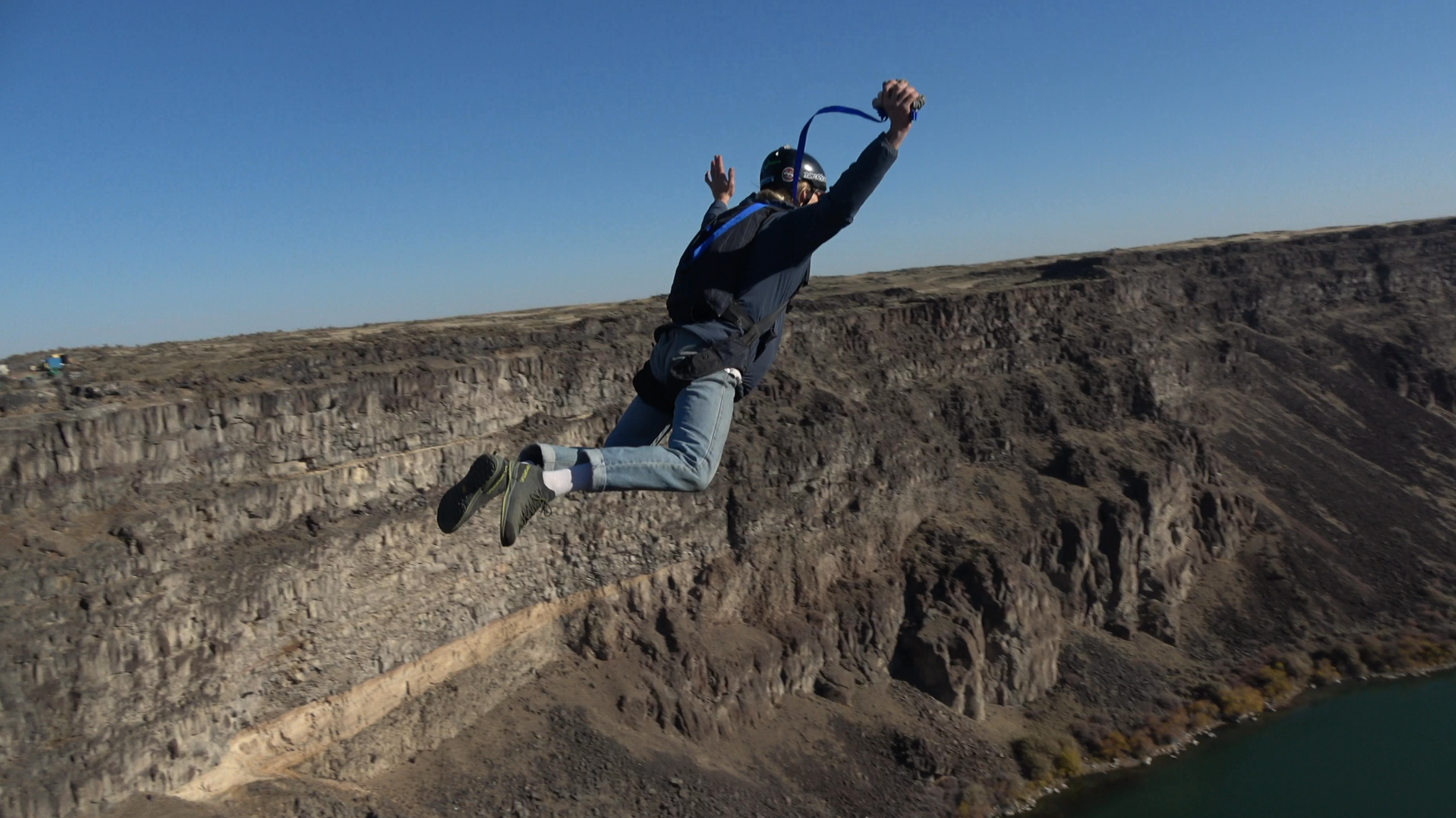
Student preparing for Intro to BASE jumping course at Perrine Bridge Twin Falls Idaho
Read More
Intro to BASE Jumping Course Twin Falls: What You’ll Actually Learn in My 4-Day FJC at the Perrine Bridge
John mcevoy 5/28/19 John mcevoy 5/28/19

Intro to BASE Jumping Course Twin Falls: What You’ll Actually Learn in My 4-Day FJC at the Perrine Bridge

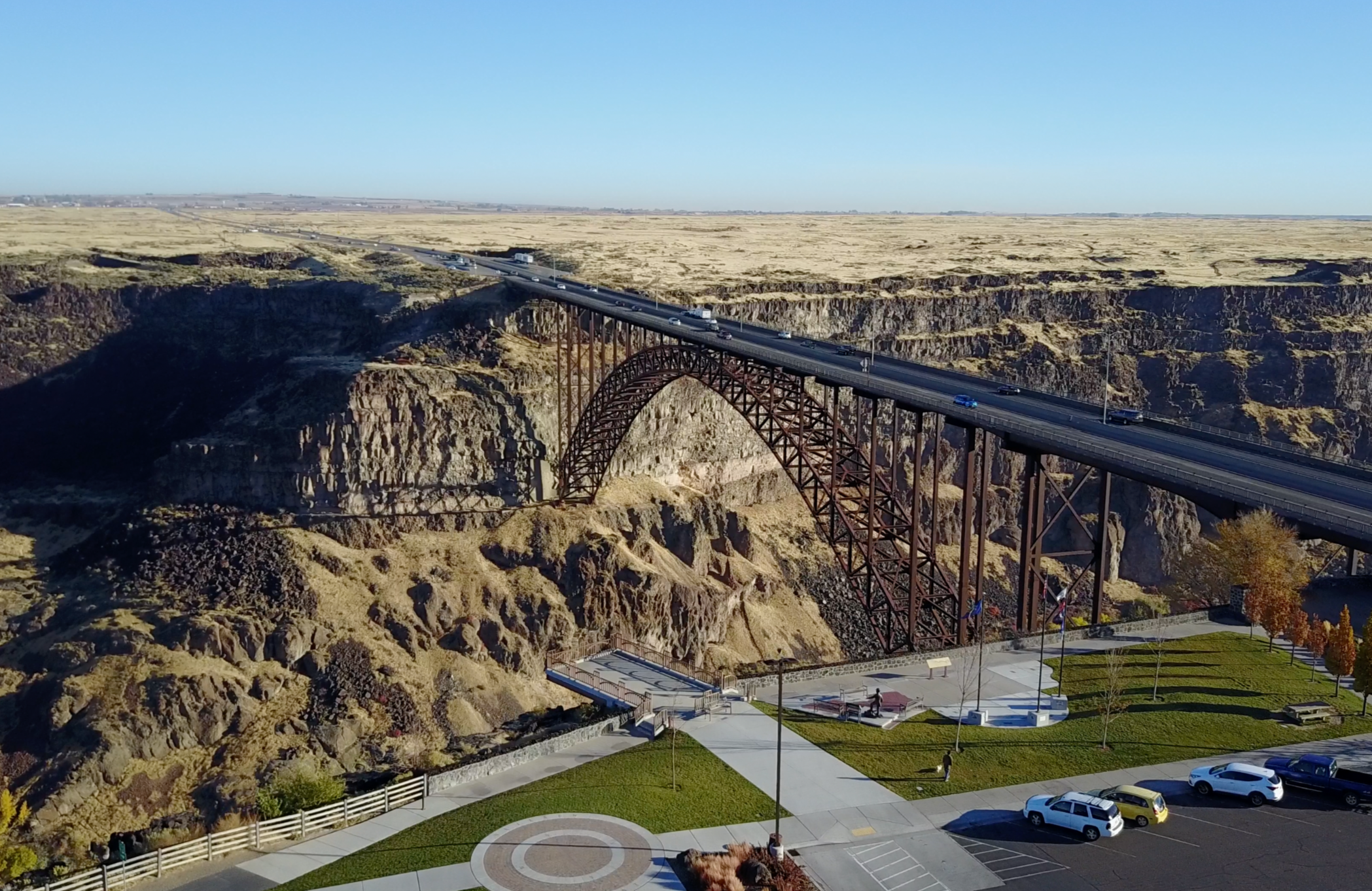
BASE jumping courses Twin Falls, Idaho, USA
Read More
BASE Jumping Safety in Twin Falls: The 7 Decisions That Matter Most
John mcevoy 5/28/19 John mcevoy 5/28/19

BASE Jumping Safety in Twin Falls: The 7 Decisions That Matter Most

The Perrine Bridge, twin Falls, Idaho - The home of BASE jumping

Read More

In the Slider Down world we are playing a game where inches and feet matter - How much they matter can somewhat be managed by how much risk we are willing to accept, but we always need to be able to make decisions quickly, and be able to adapt to a very dynamic environment.

Plan A can quickly turn into Plan B, or even C.

No matter how many jumps we have, how current, or mindful we are with our practice, we can never remove the unknown probability that everything can go wrong the moment our feet leave the object.

Some good practices to minimize our risk are to:

—  Jump only when we feel good, and are in a good headspace

—  Be confident, and competent in our equipment setup

—  Jump in good conditions

&

— Jump objects that give us margins for error, and are within our ability level

Aside from managing our risk, we can develop certain skills, and make some adjustments to our equipment that will at least improve our chances of getting out of a bad situation as smoothly as possible.

While muscle memory, and skills will somewhat naturally develop by just doing more jumps, you can get much further a head in just a few days of focussed attention.

In this short piece I umbrella these modifications and skills with the term ‘Become One with your Canopy’

By doing these things, you will end up being in more control, be more confident, and be more prepared when shit hits the fan.

The modifications are done to personalize your equipment to you, and the skills are sharpened, and put away to hopefully never be used.

Although, it’s a good idea to resharpen them periodically.

A note on Canopies

A manufacturers worst nightmare is that someone buys their product, starts using it, and something negative happens as a result of how it was constructed.

On the serious end of this, things can break, or wear out faster than intended but thats another conversation for another day.

Today we are going to focus specifically on Brake, and Toggle Settings.

On the consumer end of things, we tend to put a high value on products we can take out of the box and start using right away.

The majority of us don’t want to spend a bunch of money on something, and then have to spend a bunch of time making adjustments to suit our needs.

Manufacturers know this, and while your harness will be custom built to your body size, your canopy will not.

For the sake the sake of liability, they want their products to be as user friendly as possible, but they also all recommend

that you test your Brake and Toggle settings, and adjust them if necessary.

The vast majority of people don’t, and a lot of people teaching BASE don’t tell their students about it which I believe to be a huge over sight.

Most wing loading recommendations have a 20lb spread which is pretty noticeable in relation to how much forward speed your canopy is going to have on opening. To allow for this spread manufacturers typically set their factory Brake settings on the shallower side. The last thing they want is you stall on opening.

The same is true for Toggle settings - they come from the factory, fairly shallow.

When you buy a canopy, the only question you are asked is your weight, but there are several other things that are going to influence how the canopy will fly, and respond to inputs.

— The length of your arms

— If you like to fly with your arms close together, or out wide

— If you have your control lines routed inside, or outside the rings

— And, if your harness was actually built for you or someone else

With all this in mind - Do you think it would be of benefit to play around with the settings a bit to see if they can be better?

For the majority of people who stay in the recommended loading range, the controls are considered good enough, and thats what they end up running with.

As long as people are standing up their landings, somewhat close to where they want to land they don’t stress about it.

It’s honestly baffling to me how much money people spend on equipment, and then don’t want to take just a couple of days to dial in the controls, and build the skills that could end up saving their life someday.

I’m going to stop my rant here so this doesn’t turn into a novel pleading with people to spend more time training because I feel like I do enough of that already.

For everything I’m about to say below, it’s important to understand that I am being intentionally vague about certain aspects. This is not a ‘how to’ guide, and it’s not intended to replace proper training or mentorship. My intention is to get people thinking deeper about their equipment setup and skill development.

Lot’s people finish their FJC’s and think they are done training.

My hope is that you will finish reading this and be left with the thought ‘I have a lot of work to do’

While some might think that all this is boring stuff, I think it’s where the magic lies. Fine tuning your equipment so it becomes an extension of your body, and building razor sharp skills is the best thing you can do in order to play this game for a long time.

Equally, the majority of people don’t do any of this stuff. While people are always going to get hurt and killed doing dumb shit, I want to at least attempt to build a new breed of jumpers who take all this stuff seriously.

Custom Toggle Settings

When you are in flight, if you can bring your toggles down past your hips and are still moving fast across the ground, they are set too shallow.

On landing, if your canopy continues to fly forwards and lands in front of you after you’ve touched down, they are also too shallow.

By making them deeper:

Your canopy will respond to inputs sooner (great for object avoidance)

It will be easier to sink (great for accuracy)

And it will improve the power of the flare (great for landing)

Deeper Toggle Setting = Shorter Control Stoke = More Responsive = Better for everything

The sweet spot for YOU could be making them deeper as little as 1” or as much as 8” depending on how YOU like to fly and land your canopy, and the length of YOUR arms.

Doing this becomes is crucial if you plan on using Toggles in an Object Avoidance scenario. You need to be able to stop the canopy from flying towards the object and turn it on a dime. If your control stroke is too long, good luck with that.

While it’s always best to have someone more experienced watching over you, playing with this is not something that coaching is 100% mandatory for.

Just make your settings an inch deeper, go make a jump off something forgiving, and repeat until you find the setting you love. The response I get from people after helping them with this is always extremely positive. People feel far more in control of everything, which leads to them enjoying everything even more.

Can your toggle settings be too deep? - Absolutely

If your settings are so deep that when you’re in full flight your glide is significantly decreased, they are too deep.

On landing, if the canopy stalls before you get your hands to your hips, they are also too deep.

To avoid making them too deep, it’s best to adjust them an inch at a time.

I know some people who prefer to take a wrap on the line while in flight but I’m not a huge fan of that for slider down setups.

If you need to do that in an avoidance situation, it’s adding an extra thing you have to do, and in those times, the less you have to do the better.

Custom Brake Settings

Having a custom deep brake setting for Slider Down is a point of debate among some experienced jumpers and I find it very unfortunate.

Part of me thinks that a lot of the nay sayers just never got one, and they’ve survived just fine, so thats what they tell people.

Is this necessary to have them? No

Could it end up being something extremely beneficial someday? - Absolutely

The primary reason to have a custom deep brake setting is: to decrease how much forward speed your canopy has on opening.

If you have a 180 on a slider down solid object there is no argument you can make to have me believe thats it’s better to be flying at the object faster.

A secondary benefit: if you are using a single rear riser in an avoidance situation, the depth of your setting will dictate how well your canopy turns.

With a good setting, the canopy will almost pivot in place

With a setting thats too shallow, the canopy will move still move forward while turning

With a setting thats too deep - the canopy will just stall and not turn

Play with this is a very delicate process.

The danger is that if you set them too deep, your canopy could stall on opening.

For this reason I think most people just don’t want to mess with it, and stay with the ‘good enough’ concept I mentioned above.

There is a method people used to recommend to try and find this magical setting yourself.

It involves doing a skydive on your BASE canopy, finding the stall point, and marking the line while in flight.

While this seems like an ok idea, I’m against it for a few reasons.

1- On a skydive you’re likely jumping a Skydiving container (which you’ve probably rented) and the riser length is going to be different than your BASE rig.

2- It’s usually recommend to mark the point where the canopy begins to stall, which is too deep.

3- As I mentioned above, with a custom brake setting we are not just looking at forward speed. We are also looking at the turn response. This is very difficult to gauge without video from above.

4- When you have the setting marked, you have to take it to a rigger, get the setting installed, then you have to go test it a BASE jump. If something is off, you have to start all over again.

Instead of going through this annoying process you can do it all off the bridge in 4-6 jumps doing specific riser drills with the equipment configuration you’re actually going to be using.

Unfortunately, in order to do it correctly you are going to need some coaching, or at least have a well seasoned mentor helping you out.

In contrast to toggle settings which you can play with yourself, I highly discourage people to mess with their brake settings themselves.

Evasion Skills

Often called Avoidance Skills I prefer the term Evasion Skills. View it as a bank robbery where you get away clean without a scratch on you.

These skills are what you rely on when an object strike is imminent unless you do something very quickly.

Jumpers have been arguing since the dawn of time over the most efficient way to turn your canopy away from objects and I’m not here to continue that debate today, although I do plan on putting an end to it at some point.

Before I briefly talk about the methods, the most important thing to keep in mind is that if you open facing an object, you need to do something to turn your canopy as quickly as possible.

While it’s true that each method can be argued to be better or worse in a given situation, as long as you don’t hit the object, and then manage to land  uninjured, thats all that matters.

To turn your canopy most effectively there are three commonly accepted methods:

— Double Rear Risers

— Single Rear Riser

— Toggles

When first learning, I think it’s good to try all three of them so you at least get some idea of how each feels, and then you pick one, and get really good at using it.

With all of them, it’s good to know how much input you need to give in order to turn a certain amount.

For example, with single rear riser you should know if pulling it to your face is enough to turn 90, or maybe you need to pull it to your shoulder, or maybe even further.

People love to argue over which method is better than the other but the reality is that there are benefits and drawbacks to all of them.

You can practice these by starting with rear facing floaters.

Exit facing the bridge, deploy, and try and turn the canopy before you fly under it.

Side floaters are great as well - When people first start doing avoidance work they tend to over correct, often doing a full 180 correction. In a live scenario it’s frequently enough to just turn 90 degrees and I think side floaters do a good job mimicking this.

Then you can progress to the ultimate test: Packed 180’s.

Packed 180’s are, in my opinion, the single best thing you can do for Object Avoidance training.

Floaters are great to get the mechanics down for the method you plan on using, but you’re not going to get the full feel of things until you actually experience it.

It’s far better to have that experience for the first time on a forgiving object, in a controlled setting vs out in the wild.

Aside from actually simulating an off heading in a forgiving environment this also gets people in the mindset of expecting it.

I really feel like thats most of the battle.

When you’re in the waiting room, if you are expecting an off heading, and are ready to respond, you have a much better chance of success vs not expecting it and being caught off guard.

Packed 180’s are another topic of debate that some people argue about.

I’ve even heard of several coaches telling their students that they are a horrible idea, that you are intentionally packing a malfunction etc

I’ve been doing them myself, and with students, for the last 10 years and I have yet to see any problem with them.

I’ve seen more people land in the trees resulting from a low turn on normal jumps than I’ve seen any problems resulting from a packed 180.

When doing packed 180’s at the bridge I think it’s best to have no wind, or a headwind. I’m not a fan of doing them in tailwinds because after initially fixing the 180, you have to do another 180 into the landing area. Depending on which method you’ve used you might be too low to make it over the trees.

If the beach is open, great, but if not, and it’s a tailwind, I typically won’t do them with people.

I think it’s best to do these as dropped PCA’s vs free falls because it gives you more altitude.

While these are a fantastic thing to do every so often to keep your skills sharp, the first time you do them it’s best to have someone experienced watching over you. Even when you are comfortable doing them yourself, make sure you have someone on the load with you in case you end up in the water.

Lastly, keep in mind that packed 180’s are the last thing you do in avoidance progression - You want to have the mechanics of your method dialed from floaters before you start doing them.

Becoming One with your Canopy isn’t about chasing perfection or turning every jump into a science project. It’s about taking ownership of your equipment and the skills that sit between you and a potential trip to the hospital.

Dial in those toggles until the canopy feels like an extension of your body.

Set your brakes so you have a little more time to fix off headings.

Put in the work on your Evasion Skills so your hands already know what to do when the wall suddenly appears after opening.

None of this removes the risk, but it stacks the odds in your favor and turns “I got lucky” into “I was ready.”

Spend the time now off forgiving objects, so that when everything goes sideways you don’t have to think—you just react and fly away clean.

That’s the real game.

Experienced Jumpers

Resources

B.E. Prepared

Intro to Terminal

New Jumpers

Blog

BASE Guiding

BASE Jumping Course

Private BASE Coaching

About

Contact

© 2026 BASE Guiding — Professional BASE Jumping Instruction

BASE Guiding offers professional BASE jumping instruction, mentorship, and progression coaching for skydivers looking to safely transition into BASE.