BASE Jumping Courses 2026:
The Complete Guide to Choosing a Safe & High-Quality First Jump Course (FJC)

Introduction
BASE jumping is one of the most rewarding — and most dangerous — activities in the world. A proper First Jump Course (FJC) is the single most important investment you will make in your BASE career.
Done right, it builds the foundation that keeps you alive and progressing for years. Done poorly, it can create dangerous habits that show up when margins are tiny.
This guide walks you through exactly what to look for when choosing a BASE jumping course so you can make an informed decision and set yourself up for success.
Prerequisites: How Much Skydiving Experience Do You Really Need?
The most commonly agreed minimum for a reputable FJC is 200 skydives.
This number isn’t arbitrary. It is a meaningful milestone that demonstrates several critical things:
Commitment — Reaching 200 jumps takes real dedication and gives you time to decide if BASE is truly for you.
Competence — By 200 jumps you are usually working toward your C-license (accuracy, night jumps, group jumps, etc.). You’ve also hit the requirement to fly wingsuits and wear a camera.
Real-world problem solving — You will have experienced line twists, off-landings, possible cut-aways, and other surprises while still high above the ground with a reserve. Learning to handle these under a skydiving canopy is far safer than encountering them for the first time off a fixed object close to the ground.
Packing proficiency is equally important. Many students arrive nervous about packing because they don’t fully understand the system. Spend time learning proper packing technique before your course — most schools provide packing videos, and many will send you a practice rig if you don’t have local help. Good packing skills reduce stress and let you focus on the actual training.
Fitness matters more than most people expect. FJC days involve hiking, repeated packing, intense focus, and long days. Being physically prepared helps you stay sharp when fatigue sets in.
Canopy Skills to Master Before Your FJC
The two skills that transfer most directly to BASE are:
Immediate heading correction right after deployment
Consistent accuracy landings
Practice these relentlessly in the sky. In BASE (especially slider-down), you have very little time and altitude to fix problems under canopy. Strong canopy control from day one dramatically increases both your safety and your enjoyment.
Mental & Psychological Preparation
The greatest skill in BASE is self-awareness.
Know who you are, what you are capable of on any given day, and — most importantly — what your real limits are. Ego, peer pressure, and overconfidence have ended far more BASE careers than lack of skill.
Come to your course ready to be honest with yourself and your instructor. The jumps will still be there next season.
What a High-Quality First Jump Course Actually Looks Like
A great FJC focuses heavily on object and weather evaluation and canopy control. The instructor should be an experienced, active BASE jumper whose primary focus is teaching — not just funding their own jumping.
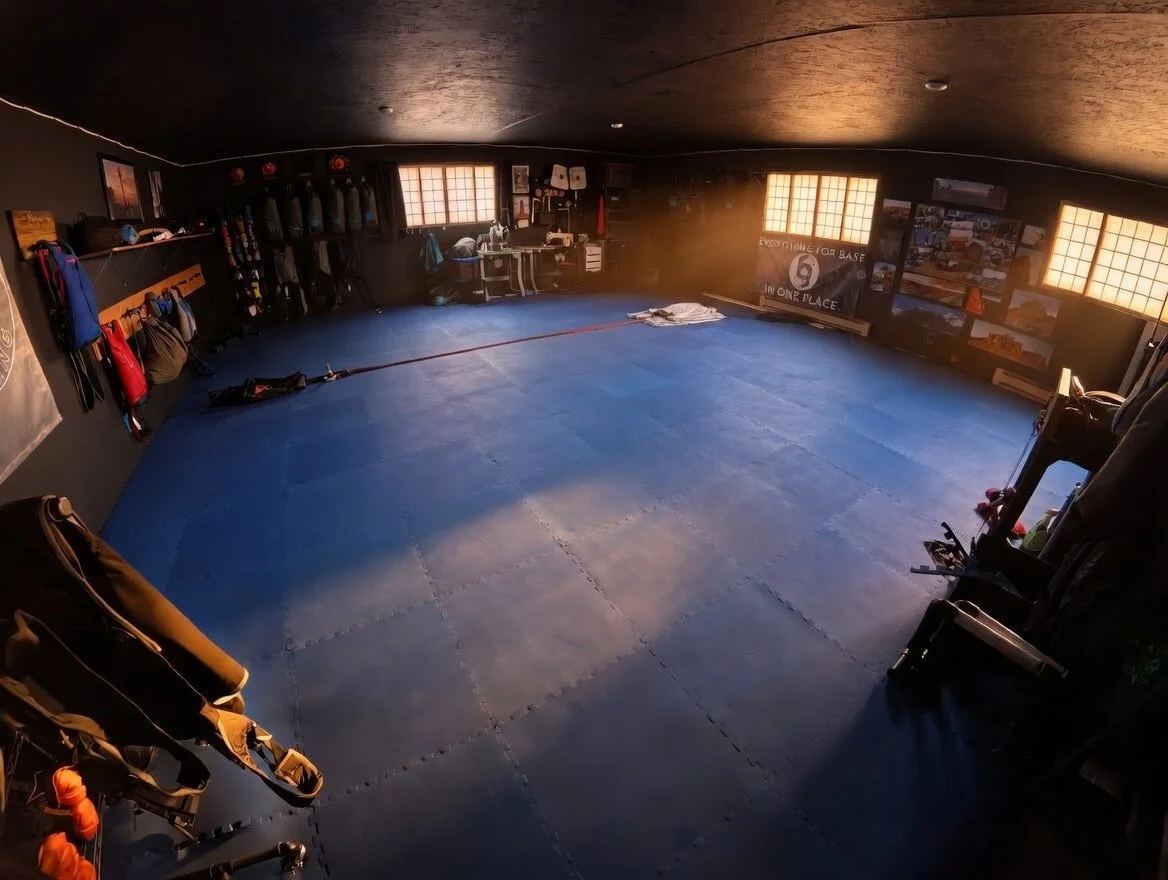
Look for instructors who spend their energy on your progression rather than telling war stories or showing off. Schools that invest in proper facilities, quality camera systems, gear repair capability, and structured debriefs show they are running a real training program, not a side hustle.
Ideal group size Smaller is almost always better. Large groups (even with multiple instructors) inevitably water down individual attention. BASE is too dangerous for “one-size-fits-all” teaching.
Instructor qualifications Prioritize instructors who have been actively BASE jumping for at least 5 years and have a proven background in coaching or teaching. Being a great jumper does not automatically make someone a great instructor.
Key Factors for Comparing BASE Schools
Beyond price, evaluate these:
Dedicated briefing/classroom space
Quality of video debriefs (dedicated cameras vs. phone footage)
Gear repair capability on site
Post-course support and mentoring (or are you just sent off into the wild?)
What happens on bad-weather days?
Equipment provided vs. what you must bring
Red Flags to Watch For
Very large group sizes
Pressure to jump regardless of conditions or student readiness
Rigid “Day 2 = X jump” style curriculum instead of earned progression based on your performance
Instructors who seem more focused on their own jumping or impressing students than on teaching
Lack of emphasis on canopy control and object evaluation
Why Canopy Control Is More Critical Than Freefall for Beginners
Most BASE accidents happen under canopy, not in freefall.
Students either fail to react quickly enough and hit an object, or they misjudge their approach and overshoot/undershoot, landing in trees, rocks, water, or hard. In slider-down BASE, canopy control is everything. A quality course will make this a major focus.
Common Student Struggles & How Good Instructors Fix Them
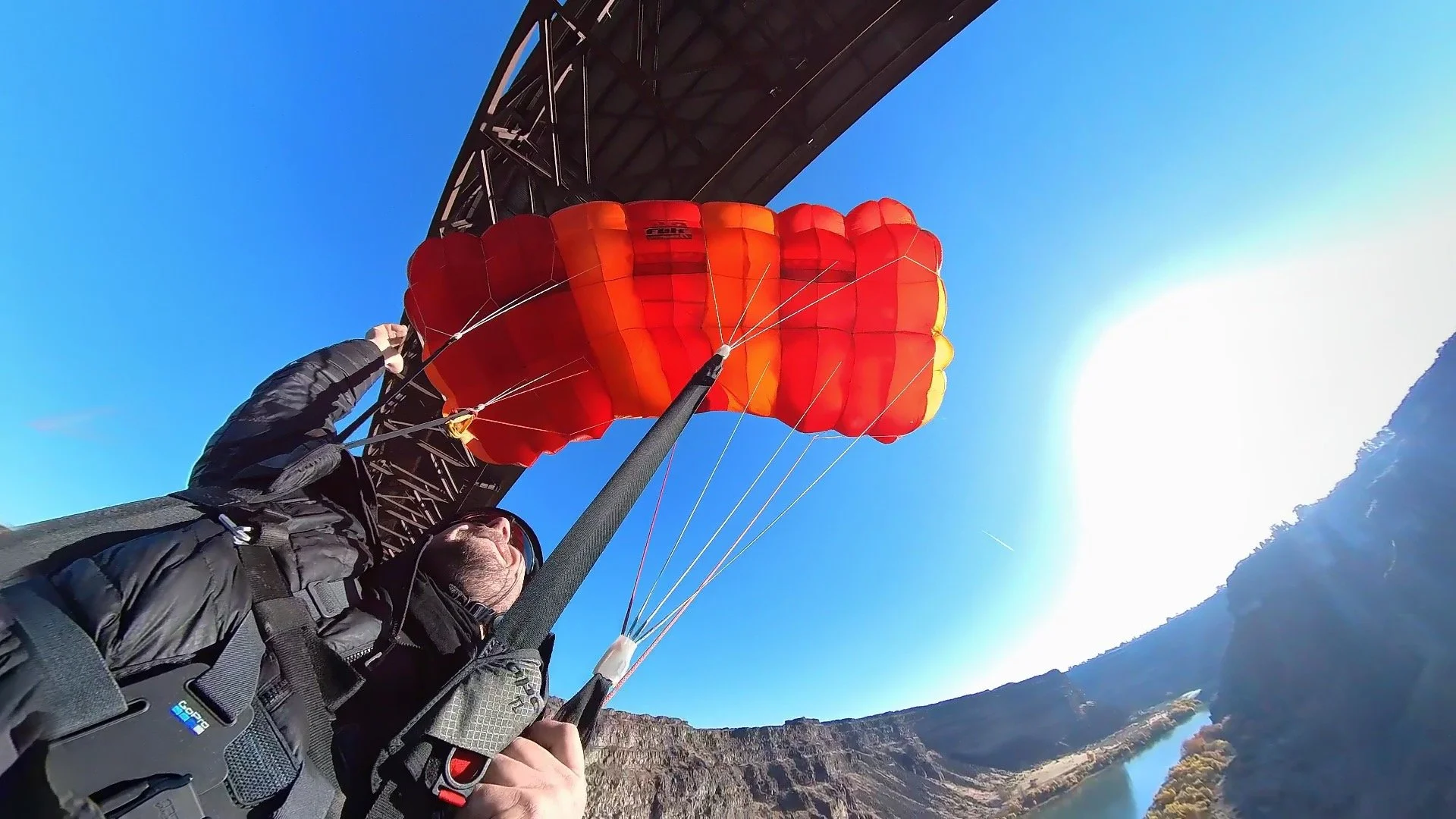
Every BASE jump has six distinct phases: Exit → Freefall → Deploy → Take control → Fly the canopy → Land
Every student struggles in different areas. A skilled instructor watches one jump and immediately identifies your biggest priority, then gives you specific, actionable feedback you can apply on the very next jump.
After the Course: Your Progression Path
A professional course should give you a personalized progression plan based on how you performed and what your goals are (buildings, antennas, spans, wingsuit mountains, etc.).
Good schools offer ongoing mentoring, currency recommendations, and clear next steps instead of simply patting you on the back and wishing you luck.